Dubrovnik Private Walking Tours
4
Experiences available

Dubrovnik Tours

Expert-led Dubrovnik walking tours that turn fortified walls and maritime history into meaningful discoveries

Let Your Curiosity Shape Your Journey

Join passionate experts on intimate walking tours that reveal a city's unique stories, spark conversations, and leave you seeing the world—and yourself—a little differently.

Crafted for conversation

With ten or fewer guests, ask questions, engage with your Expert, and fully immerse yourself.

Experts, not guides

Explore with 1,200+ Experts, from historians and architects to archaeologists and chefs.

Structured, never scripted

Your interests guide your Expert, leading to stories and perspectives that matter to you.

From curious to connoisseur

For first-time visitors or seasoned explorers, our tours span city highlights to deep-dive masterclasses.

Dubrovnik, Seen with Context

Dubrovnik isn’t simply fortified walls by the sea. Walk with an expert to explore how merchants, diplomacy, and maritime power shaped the city.

Hear from our customers

141 Reviews

Fantastic trip to Montenegro. Beautiful country with a challenging history.

Photo Shared by Susan with their review

Jute was an excellent guide and we learned a tremendous amount about Dubrovnik and Croatia. Highly recommend.

Enjoyed her economic and social insight, her sense of humor and her depth of knowledge.

Photo Shared by Cicely with their review

Dubrovnik Tours

Dubrovnik rises dramatically along Croatia’s Adriatic coast, where limestone walls enclose a city shaped by centuries of maritime trade, diplomacy, and cultural exchange. Founded in the early medieval period, Dubrovnik grew into the independent Republic of Ragusa, a city-state that rivaled Venice as a commercial and diplomatic power in the Adriatic.

For centuries, Ragusa prospered through skilled diplomacy, international trade, and a commitment to civic independence. Its carefully preserved streets, churches, and palaces reflect a society shaped by merchants, scholars, and sailors navigating between empires. Today, Dubrovnik is one of Europe’s most striking historic cities, where medieval architecture and maritime history remain vividly present.

Context Travel’s Dubrovnik walking tours are led by historians and local experts who help travelers understand how trade networks, diplomacy, and civic identity shaped the city behind the walls.
Dubrovnik is known for its medieval walls, maritime history, and the legacy of the Republic of Ragusa.

The Republic of Ragusa

For centuries, Dubrovnik functioned as an independent maritime republic that maintained diplomatic ties across Europe and the Mediterranean while preserving its autonomy.

Medieval Walls and Fortifications

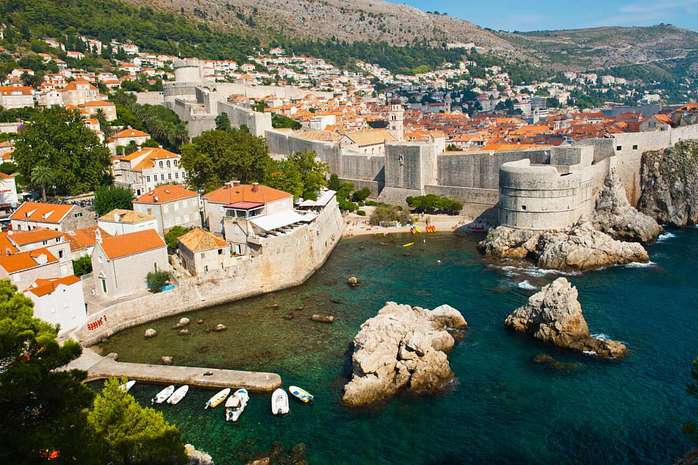
Dubrovnik’s massive defensive walls, built between the 13th and 16th centuries, remain among the best-preserved fortification systems in Europe.

Adriatic Trade and Maritime Power

The city prospered as a trading hub connecting the Balkans, the Mediterranean, and the Ottoman world.

Renaissance Architecture and Civic Planning

Palaces, monasteries, and churches reflect Dubrovnik’s prosperity and its commitment to civic institutions and public life.

Cultural Heritage and Modern Tourism

Dubrovnik’s historic setting and dramatic coastline have made it one of the Adriatic’s most visited destinations, balancing preservation with global interest.
Dubrovnik appeals to travelers interested in maritime history, medieval cities, and Mediterranean culture. First-time visitors often begin with guided introductions to the Old Town to understand the city’s political and commercial history. Lifelong learners are drawn to the story of the Republic of Ragusa and its diplomatic influence, while couples and repeat travelers often explore the city’s architecture, coastal landscapes, and cultural traditions beyond the main monuments.
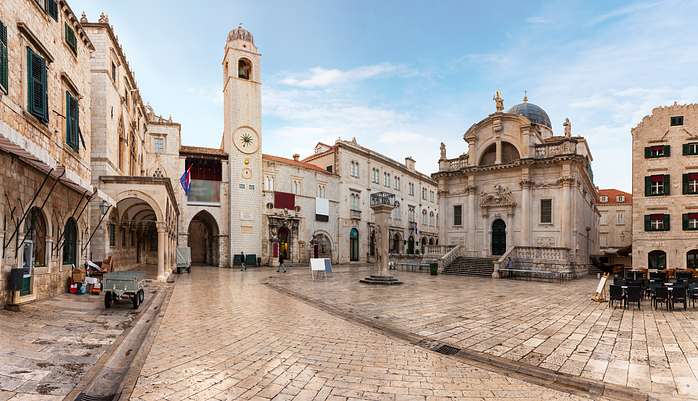
Dubrovnik’s historic center is compact and pedestrian-only, making it ideal for walking tours. Most major landmarks within the Old Town can be reached on foot within minutes.

Most travelers spend one to two days exploring Dubrovnik’s historic center and surrounding coastline, often combining the city with other destinations along the Adriatic.

Croatian is the official language spoken in Dubrovnik, though English is widely spoken in tourism areas. Croatia uses the euro (€) as its currency.

Late spring and early autumn are particularly pleasant times to visit, offering warm weather and fewer crowds than the peak summer season.

What is Dubrovnik known for?

Dubrovnik is known for its medieval walls, historic Old Town, and its past as the independent maritime Republic of Ragusa.

Is Dubrovnik worth visiting?

Yes. Dubrovnik offers one of the best-preserved medieval cities in Europe, with a rich maritime history and dramatic Adriatic scenery.

How many days should you spend in Dubrovnik?

Most travelers spend one to two days exploring Dubrovnik’s Old Town and coastal surroundings.

Is Dubrovnik walkable?

Yes. Dubrovnik’s Old Town is entirely pedestrian and compact, making it ideal for walking tours.

When is the best time to visit Dubrovnik?

Late spring and early autumn offer warm weather and fewer crowds, making them ideal seasons for exploring the city.

Why are Dubrovnik’s walls famous?

Dubrovnik’s walls are among the best-preserved medieval fortifications in Europe and have protected the city-state for centuries.