


Friendly guide. Very knowledgeable. We had a great time

2
Experiences available
Bruges Tours
Expert-led Brussels private city tours that turn grand squares and European culture into meaningful discoveries
Let Your Curiosity Shape Your Journey
Join passionate experts on intimate walking tours that reveal a city's unique stories, spark conversations, and leave you seeing the world—and yourself—a little differently.

Crafted for conversation
With ten or fewer guests, ask questions, engage with your Expert, and fully immerse yourself.
Experts, not guides
Explore with 1,200+ Experts, from historians and architects to archaeologists and chefs.
Structured, never scripted
Your interests guide your Expert, leading to stories and perspectives that matter to you.
From curious to connoisseur
For first-time visitors or seasoned explorers, our tours span city highlights to deep-dive masterclasses.
Bruges, Seen with Context
Brussels isn’t just grand squares and famous chocolate. Walk with an expert to uncover how guilds, artists, and European politics shaped the city.
Hear from our customers
Natalie was a wonderful guide, this was my 4th trip to Brussels, but I had never had an orientation to the city as a whole and how it developed. The route was excellent - I feel like I know the city so much better!
Asefeh was a great guide. I enjoyed learning about the food traditions as well as the neighborhoods. I have food intolerances and she charmingly worked around them
Brussels Private City Tours
Brussels sits at the center of Belgium and, in many ways, at the crossroads of Europe itself. Founded as a medieval trading town along the Senne River, the city developed into a powerful commercial and political hub within the Low Countries. Over centuries, its markets, guild halls, and civic institutions reflected the wealth generated through trade and craftsmanship.
Today, Brussels serves as the capital of Belgium and the administrative heart of the European Union, where international diplomacy and policymaking unfold alongside historic squares and lively neighborhoods. Travelers come to Brussels for its architecture, museums, and food culture, but the city’s deeper story lies in how it bridges languages, regions, and traditions. Context Travel’s Brussels tours are led by historians and cultural experts who help travelers connect the city’s medieval foundations, political influence, and everyday life into a clearer understanding of modern Europe.
Brussels is known for its grand medieval square, its political role in Europe, and culinary traditions that have shaped Belgian identity.
Grand Place and Medieval Civic Power
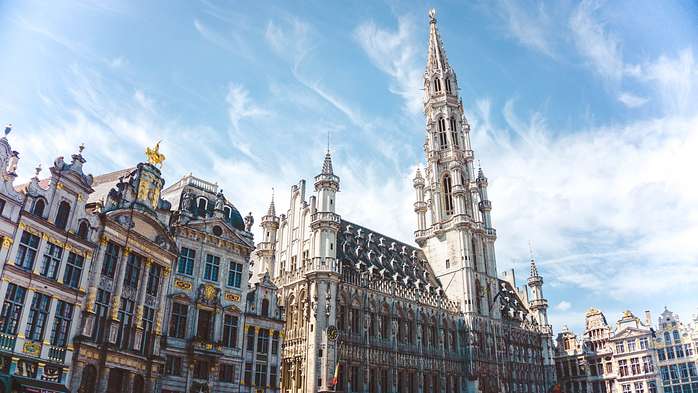
The Grand Place, Brussels’ central square, is one of Europe’s most ornate historic plazas. Its guild houses and town hall reflect the prosperity of the city’s merchant and craft communities during the late Middle Ages.
Capital of the European Union
Brussels hosts major EU institutions, including the European Commission and European Council, making the city a center of political decision-making that affects millions across Europe.
Belgian Culinary Traditions
Brussels is famous for chocolate, waffles, and beer, but its food culture also reflects centuries of craft production and regional pride.
Art Nouveau Architecture
At the turn of the 20th century, architects such as Victor Horta transformed Brussels into a center of Art Nouveau design, leaving behind buildings that helped define a global architectural movement.
Cultural and Linguistic Diversity
Located between French-speaking Wallonia and Dutch-speaking Flanders, Brussels embodies Belgium’s complex linguistic and cultural landscape.
Brussels appeals to travelers interested in history, culture, and contemporary European life. First-time visitors benefit from guided introductions that connect the Grand Place, historic neighborhoods, and EU institutions into a coherent narrative of the city. Lifelong learners are drawn to Brussels’ political importance, architectural heritage, and cultural diversity. Food lovers appreciate the city’s chocolate, beer, and café traditions, while repeat visitors explore neighborhoods, museums, and the broader Belgian region.
Brussels’ historic center is compact and walkable, making guided irvate tours one of the best ways to explore the city. Major landmarks such as the Grand Place, Royal Palace, and surrounding neighborhoods are easily reached on foot.
Most travelers spend two to three days in Brussels exploring museums, historic sites, and food culture. Brussels also serves as a convenient base for visiting nearby cities such as Bruges, Ghent, and Antwerp.
French and Dutch are the official languages of Brussels, though English is widely spoken in tourism and international institutions. Belgium uses the euro (€) as its currency.
What is Brussels known for?
Brussels is known for the Grand Place, its role as the capital of Belgium and the European Union, and Belgian culinary traditions such as chocolate, waffles, and beer.
Is Brussels worth visiting?
Yes. Brussels offers a mix of historic architecture, museums, food culture, and political importance as the administrative center of the European Union.
How many days should you spend in Brussels?
Two to three days is ideal for exploring the historic center, visiting museums, and experiencing Brussels’ culinary traditions.
Is Brussels walkable?
Yes. The historic center is compact and pedestrian-friendly, making it well-suited for private city tours.
Why is Brussels the capital of the European Union?
Brussels became the center of many European institutions after World War II because of Belgium’s central location and its tradition of international diplomacy.
What food is Brussels famous for?
Brussels is famous for Belgian chocolate, waffles, fries, and a wide variety of traditional beers produced across the country.