
3
Experiences available
Valencia Tours
Expert-led Valencia private tours that turn historic markets and Mediterranean culture into meaningful discoveries
Let Your Curiosity Shape Your Journey
Join passionate experts on intimate walking tours that reveal a city's unique stories, spark conversations, and leave you seeing the world—and yourself—a little differently.

Crafted for conversation
With ten or fewer guests, ask questions, engage with your Expert, and fully immerse yourself.
Experts, not guides
Explore with 1,200+ Experts, from historians and architects to archaeologists and chefs.
Structured, never scripted
Your interests guide your Expert, leading to stories and perspectives that matter to you.
From curious to connoisseur
For first-time visitors or seasoned explorers, our tours span city highlights to deep-dive masterclasses.
Valencia, Seen with Context
Valencia isn’t simply beaches and paella. Walk with an expert to uncover how medieval power, trade, and Mediterranean culture shaped the city.

Hear from our customers
Valencia Tours
What is Valencia known for?
Valencia is known for its historic architecture, Mediterranean cuisine, and as the birthplace of paella.
Is Valencia worth visiting?
Yes. Valencia offers a mix of historic monuments, vibrant markets, modern architecture, and coastal culture.
How many days should you spend in Valencia?
Most travelers spend two to three days exploring Valencia’s historic center, markets, and coastal areas.
Is Valencia walkable?
Yes. Valencia’s historic districts and many major landmarks are easy to explore on foot.
What are the most famous places to visit in Valencia?
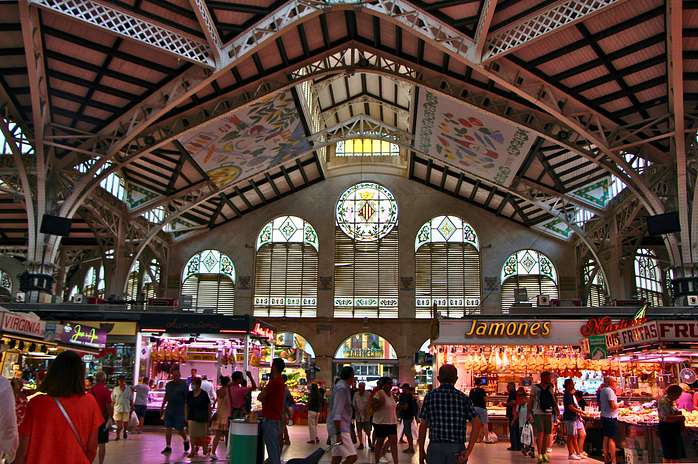
Popular sites include Valencia Cathedral, La Lonja de la Seda, the Central Market, and the City of Arts and Sciences.
What food is Valencia famous for?
Valencia is best known as the birthplace of paella, traditionally made with rice, vegetables, and meat or seafood.
Where is the best area to stay in Valencia?
Most travelers prefer to stay in or near the historic center, including neighborhoods such as El Carmen or Ruzafa. These areas offer walkable access to cultural sites, markets, and restaurants.
Valencia sits along Spain’s eastern Mediterranean coast, where the Turia River meets the sea, a location that has shaped the city’s history for more than two thousand years. Founded as a Roman colony in the 2nd century BCE, Valencia later flourished under Islamic rule before becoming an important Christian kingdom during the medieval Reconquista. These successive cultures left a lasting imprint on the city’s architecture, urban design, and traditions.
Today, Valencia blends its historic center, Gothic monuments, and vibrant markets with innovative contemporary architecture and a celebrated culinary identity. The city is also known as the birthplace of paella and remains one of Spain’s most dynamic Mediterranean ports. Context Travel’s Valencia tours are led by historians and local experts who help travelers connect Valencia’s Roman foundations, Islamic heritage, and modern cultural life.
Valencia is known for its historic architecture, Mediterranean cuisine, and cultural traditions rooted in centuries of trade and exchange.
The Historic Old Town (Ciutat Vella)
Valencia’s historic center preserves Roman foundations, medieval streets, and Gothic landmarks.
La Lonja de la Seda (Silk Exchange)
This UNESCO-listed building reflects Valencia’s importance as a Mediterranean trading center during the late Middle Ages.
Valencia Cathedral and the Holy Grail Tradition
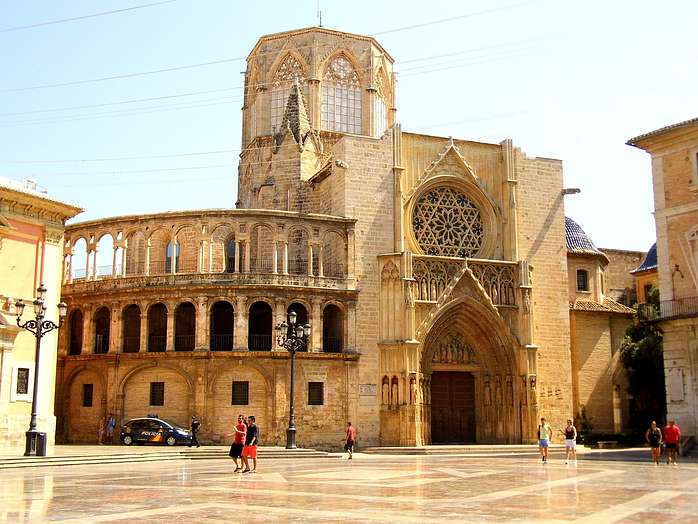
The cathedral blends Romanesque, Gothic, and Baroque styles and is associated with the legend of the Holy Grail.
Paella and Valencian Cuisine
Valencia is the birthplace of paella, one of Spain’s most famous culinary traditions.
Modern Architecture and the City of Arts and Sciences
Contemporary structures by Santiago Calatrava represent Valencia’s modern cultural and scientific ambitions.
Valencia appeals to travelers interested in Mediterranean culture, architecture, and Spanish cuisine. First-time visitors often begin with guided introductions to the historic center and major monuments to understand the city’s layered past. Lifelong learners appreciate deeper conversations about Valencia’s role in Mediterranean trade and urban development, while travelers drawn to food culture explore markets, paella traditions, and local culinary heritage.
Valencia’s historic center is compact and highly walkable, making private tours one of the best ways to explore the city’s landmarks and markets.
Most travelers spend two to three days in Valencia, allowing time to explore historic districts, museums, and the nearby coastline.
Spanish and Valencian (a regional form of Catalan) are spoken locally, though English is widely spoken in tourism areas. Spain uses the euro (€).
Spring and autumn offer the most comfortable weather for exploring the city, while summer brings warmer temperatures and lively coastal activity.