

We enjoyed spending a morning with Ante.

2
Experiences available
Split Tours
Expert-led Split walking tours that turn Roman palaces and Adriatic life into meaningful discoveries
Let Your Curiosity Shape Your Journey
Join passionate experts on intimate walking tours that reveal a city's unique stories, spark conversations, and leave you seeing the world—and yourself—a little differently.

Crafted for conversation
With ten or fewer guests, ask questions, engage with your Expert, and fully immerse yourself.
Experts, not guides
Explore with 1,200+ Experts, from historians and architects to archaeologists and chefs.
Structured, never scripted
Your interests guide your Expert, leading to stories and perspectives that matter to you.
From curious to connoisseur
For first-time visitors or seasoned explorers, our tours span city highlights to deep-dive masterclasses.
Split, Seen with Context
Split isn’t just a seaside city on the Adriatic. Walk with an expert to discover how a Roman emperor’s palace grew into the vibrant city you see today.
Hear from our customers
Tell is a fabulous tour guide, I highly recommend him.
Ante is extremely knowledgeable about the history and architecture of Split and its neighboring cities. And he is welcoming and personable. Great tour! Amos H. Davis (9/23/2025)
Split Tours
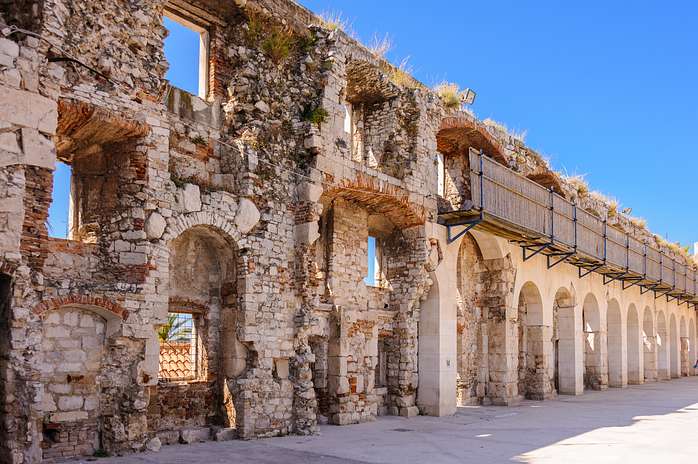
Split sits along Croatia’s Dalmatian Coast on the eastern shore of the Adriatic Sea, where maritime trade routes connected the Roman Empire with the wider Mediterranean world. The city developed around one of the most remarkable surviving Roman monuments: the palace built for Emperor Diocletian in the late 3rd and early 4th centuries. After the fall of the Roman Empire, the palace gradually transformed into a living city, with homes, churches, and markets filling the ancient walls.
Today, Split offers travelers a rare opportunity to explore a historic center that evolved directly from Roman foundations into a thriving medieval and modern city. Narrow streets, cathedral towers, and public squares reveal centuries of adaptation layered within Diocletian’s Palace itself. Context Travel’s Split tours are led by historians and local experts who help travelers understand how Roman architecture, medieval life, and Dalmatian culture shaped one of Croatia’s most distinctive coastal cities.
Split is known for its Roman heritage, coastal culture, and its role as a gateway to the Dalmatian islands.
Diocletian’s Palace
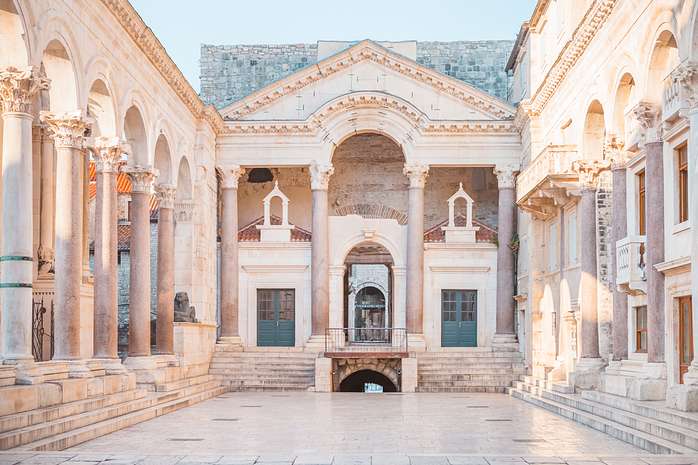
Built as a retirement residence for the Roman emperor Diocletian, this vast palace complex now forms the core of Split’s historic center and is a UNESCO World Heritage Site.
Roman and Medieval Architecture
The city’s streets preserve layers of Roman, medieval, and Venetian architecture integrated into the palace walls.
The Cathedral of Saint Domnius
Originally constructed as Diocletian’s mausoleum, the cathedral is one of the oldest continuously used Christian buildings in the world.
Dalmatian Coastal Culture
Split reflects the traditions of Croatia’s Adriatic coast, shaped by maritime trade and Mediterranean influences.
Gateway to the Adriatic Islands
The city serves as a starting point for exploring nearby islands such as Hvar, Brač, and Vis.
Split appeals to travelers interested in Roman history, Mediterranean culture, and coastal landscapes. First-time visitors often begin with guided introductions to Diocletian’s Palace to understand how the city grew from Roman foundations. Lifelong learners appreciate deeper conversations about the Roman Empire and medieval Dalmatia, while travelers interested in coastal culture explore markets, historic streets, and the surrounding Adriatic islands.
Split’s historic center is compact and highly walkable, especially within the walls of Diocletian’s Palace. Walking tours are one of the best ways to explore the city’s historic streets and monuments.
Most travelers spend one to two days in Split, often combining their visit with island excursions or travel along the Dalmatian Coast.
Croatian is the primary language spoken in Split, though English is widely spoken in tourism areas. Croatia uses the euro (€) as its currency.
Late spring through early autumn offers the most pleasant weather for exploring the city and nearby islands.
What is Split known for?
Split is known for Diocletian’s Palace, Roman architecture, Adriatic coastal culture, and its historic old town.
Is Split worth visiting?
Yes. Split offers a unique opportunity to explore a living city built within a Roman imperial palace.
How many days should you spend in Split?
Most travelers spend one to two days exploring Split and visiting nearby Adriatic islands.
Is Split walkable?
Yes. Split’s historic center and Diocletian’s Palace are easily explored on foot.
Is Split safe for travelers?
Split is generally considered safe for visitors, especially in the historic center and waterfront areas.
Can you visit nearby islands from Split?
Yes. Split serves as a major ferry hub for islands such as Hvar, Brač, and Vis.