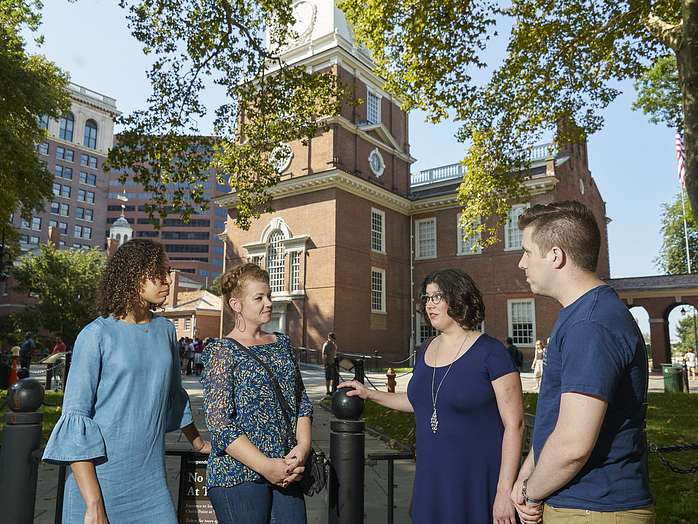


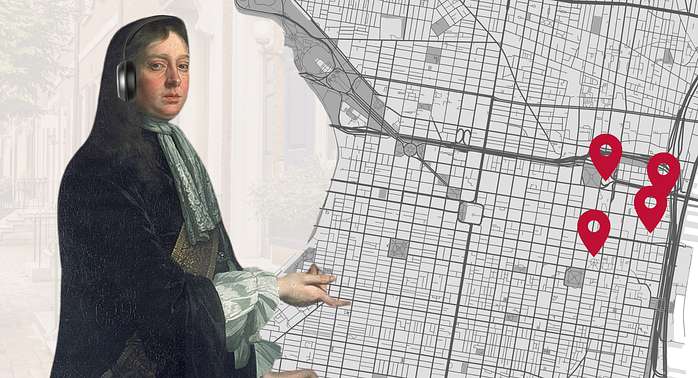

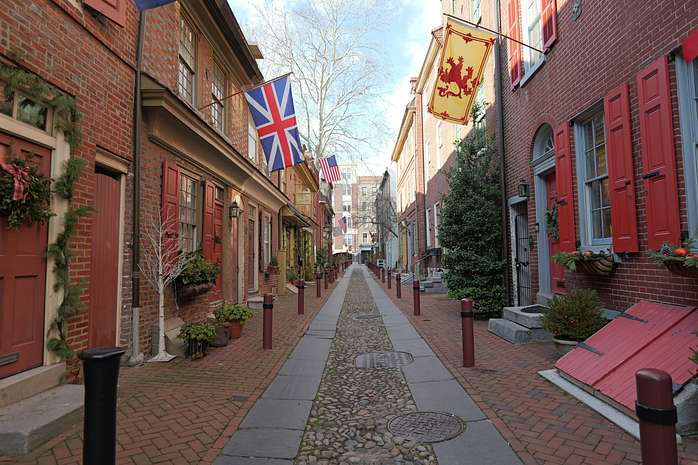
We loved our tour with Charlene! We are new locals to Philly and were seeking a tour with a special focus on the city's development, expansion and Quaker roots. Charlene delivered an informative tour tailored to our interests and provided recommendations for future exploration on our own. Highly recommend!

3
Experiences available
Philadelphia Tours
Expert-led Philadelphia sightseeing tours that turn revolutionary history and historic streets into meaningful discoveries
Let Your Curiosity Shape Your Journey
Join passionate experts on intimate walking tours that reveal a city's unique stories, spark conversations, and leave you seeing the world—and yourself—a little differently.

Crafted for conversation
With ten or fewer guests, ask questions, engage with your Expert, and fully immerse yourself.
Experts, not guides
Explore with 1,200+ Experts, from historians and architects to archaeologists and chefs.
Structured, never scripted
Your interests guide your Expert, leading to stories and perspectives that matter to you.
From curious to connoisseur
For first-time visitors or seasoned explorers, our tours span city highlights to deep-dive masterclasses.
Philadelphia, Seen with Context
Philadelphia isn’t only the birthplace of American independence. Walk with an expert to uncover how revolutionaries, reformers, and everyday citizens shaped the nation here.
Hear from our customers
We loved our time with Charlene, we learned so much about this fine city. Will request her again when we return.
Joella gave us an exceptional tour. Her enthusiasm, professionalism and extensive knowledge made Philadelphia’s history come alive. Highly recommend!
Philadelphia Tours
Philadelphia sits along the Delaware River in the northeastern United States, where its strategic port helped transform the city into one of the most important centers of political and intellectual life in the 18th century. Founded by William Penn in 1682 as a planned city based on ideals of religious tolerance and civic order, Philadelphia quickly became a hub of trade, printing, and political debate.
During the American Revolution, Philadelphia served as the meeting place for the Continental Congress and the birthplace of the United States. Documents such as the Declaration of Independence and the U.S. Constitution were debated and adopted here. Today, the city preserves one of the most significant collections of historic landmarks in the country. Context Travel’s Philadelphia tours are led by historians and scholars who help travelers understand how the city’s streets, buildings, and institutions shaped the founding of the United States.
Philadelphia is known for its role in the founding of the United States, its historic architecture, and its enduring civic institutions.
The Birthplace of American Independence
Philadelphia hosted the Continental Congress and was where the Declaration of Independence and U.S. Constitution were written and debated.
Historic Landmarks of the American Revolution
Sites such as Independence Hall and the Liberty Bell represent key moments in the creation of the United States.
Early American Urban Planning
William Penn’s grid layout, public squares, and civic design influenced later American city planning.
Civic Institutions and Political Thought
Philadelphia fostered debates about democracy, liberty, and governance that shaped American political traditions.
Art and Cultural Institutions
Museums, public art, and historic neighborhoods reflect Philadelphia’s long-standing role as a cultural center.
Philadelphia appeals to travelers interested in American history, political thought, and historic architecture. First-time visitors often begin with guided introductions to Independence Hall and surrounding landmarks to understand how the United States was founded. Lifelong learners appreciate deeper discussions about the debates and ideas that shaped the early republic, while repeat visitors explore Philadelphia’s neighborhoods, museums, and cultural institutions that reflect the city’s evolution over time.
Philadelphia’s historic center is compact and highly walkable, making walking tours one of the best ways to explore the city’s landmarks and historic districts.
Most travelers spend one to two days in Philadelphia, often visiting Independence National Historical Park along with museums and historic neighborhoods.
English is the primary language spoken in Philadelphia. The United States uses the U.S. dollar (USD) as its currency.
Spring and autumn are particularly pleasant times to visit due to comfortable temperatures and ideal walking conditions.
What is Philadelphia known for?
Philadelphia is known as the birthplace of American independence and home to historic landmarks such as Independence Hall and the Liberty Bell.
Is Philadelphia worth visiting?
Yes. Philadelphia offers some of the most important historic sites in the United States along with museums, architecture, and cultural institutions.
How many days should you spend in Philadelphia?
Most travelers spend one to two days exploring Philadelphia’s historic sites and museums.
Is Philadelphia walkable?
Yes. Philadelphia’s historic center and many major landmarks are easily explored on foot.
What are the most important historic sites in Philadelphia?
Key sites include Independence Hall, the Liberty Bell, Congress Hall, and the surrounding buildings of Independence National Historical Park.
Is Philadelphia safe for travelers?
Philadelphia is generally safe for visitors in central areas and historic districts, though travelers should remain aware of their surroundings in busy urban areas.