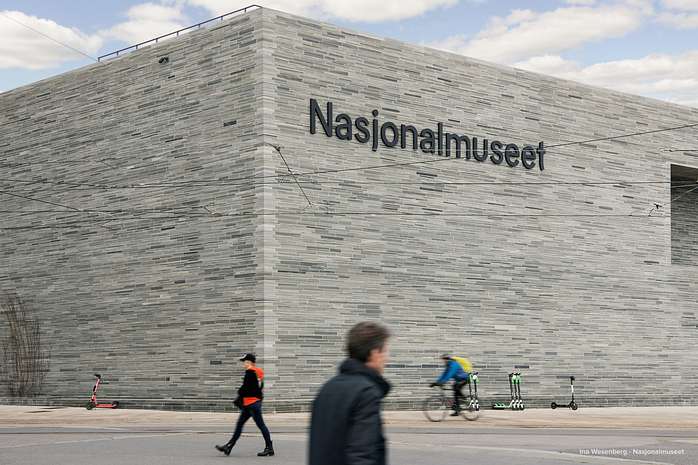


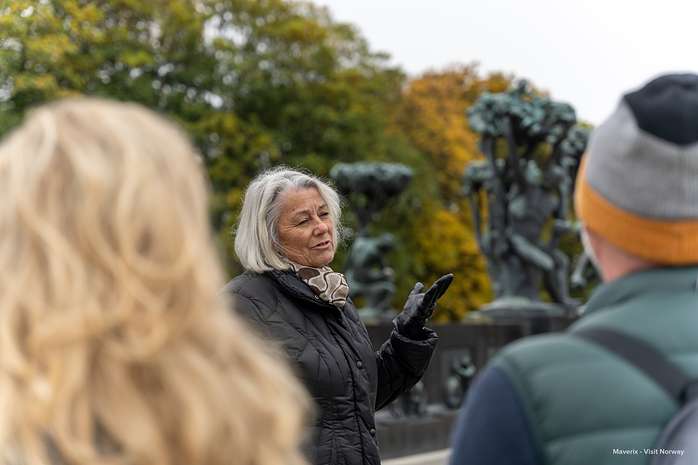
We were delighted by Anastasia’s informative tour. She had lots of knowledge to share and an easy way to present the information. Having additional images and information on her iPad enhanced our viewing of the art work. I asked to see an area of the museum that wasn’t part of the planned tour and she was kind enough to take us through the decorative arts exhibitions. I would gladly recommend her.

3
Experiences available
Oslo Tours
Expert-led Oslo private tours that turn Viking heritage and Nordic modernity into meaningful discoveries
Let Your Curiosity Shape Your Journey
Join passionate experts on intimate walking tours that reveal a city's unique stories, spark conversations, and leave you seeing the world—and yourself—a little differently.

Crafted for conversation
With ten or fewer guests, ask questions, engage with your Expert, and fully immerse yourself.
Experts, not guides
Explore with 1,200+ Experts, from historians and architects to archaeologists and chefs.
Structured, never scripted
Your interests guide your Expert, leading to stories and perspectives that matter to you.
From curious to connoisseur
For first-time visitors or seasoned explorers, our tours span city highlights to deep-dive masterclasses.
Oslo, Seen with Context
Oslo isn’t only a modern Nordic capital. Walk with an expert to uncover how Viking roots, artists, and innovation shaped the city.
Hear from our customers
Oslo Tours
Oslo appeals to travelers interested in Nordic history, design, and cultural institutions. First-time visitors often begin with guided introductions to the city’s waterfront, historic center, and museums to understand how Oslo developed from a trading settlement into Norway’s capital. Lifelong learners explore Viking heritage and Scandinavian design, while travelers interested in nature appreciate the city’s close relationship with the surrounding fjords and forests.
What is Oslo known for?
Oslo is known for its Viking heritage, maritime history, modern Scandinavian architecture, and its role as Norway’s political and cultural capital.
Is Oslo worth visiting?
Yes. Oslo offers a unique mix of Nordic history, world-class museums, modern architecture, and easy access to natural landscapes.
How many days should you spend in Oslo?
Most travelers spend one to two days exploring Oslo before continuing to Norway’s fjords or other Scandinavian destinations.
Is Oslo walkable?
Yes. Oslo’s central districts, waterfront, and many museums are easily accessible on foot.
Is Oslo safe for travelers?
Oslo is considered one of the safest capitals in Europe, with low crime rates and efficient public transportation.
Can you see fjords from Oslo?
Yes. The Oslofjord begins at the city’s harbor and extends southward, offering scenic coastal views and ferry access to nearby islands.
What museums should you visit in Oslo?
Key museums include those dedicated to Viking heritage, Norwegian exploration, and the works of artist Edvard Munch.
Oslo sits at the head of the Oslofjord in southeastern Norway, where forests, waterways, and maritime trade shaped the city’s development for more than a thousand years. Founded in the medieval period and rebuilt several times after fires and political change, Oslo grew from a trading settlement into the capital of modern Norway. Its harbor connected Scandinavia to European commerce, while its institutions helped shape Norway’s political and cultural life.
Today, Oslo reflects both deep Nordic heritage and contemporary Scandinavian design. Viking ships, medieval ruins, and royal landmarks coexist with innovative architecture, public art, and waterfront districts that define the modern city. Context Travel’s Oslo tours are led by historians, architects, and cultural experts who help travelers understand how Norway’s past—from Viking exploration to modern democracy—continues to shape the capital today.
Oslo is known for its Viking heritage, maritime history, modern architecture, and its role as the political and cultural center of Norway.
Viking Heritage
Norway’s Viking past remains central to the country’s identity, with archaeological discoveries and museums that illuminate the seafaring culture of early Scandinavia.
Maritime History
Oslo’s harbor connected Norway to trade routes across Northern Europe, shaping the nation’s economic and cultural development.
Scandinavian Design and Architecture
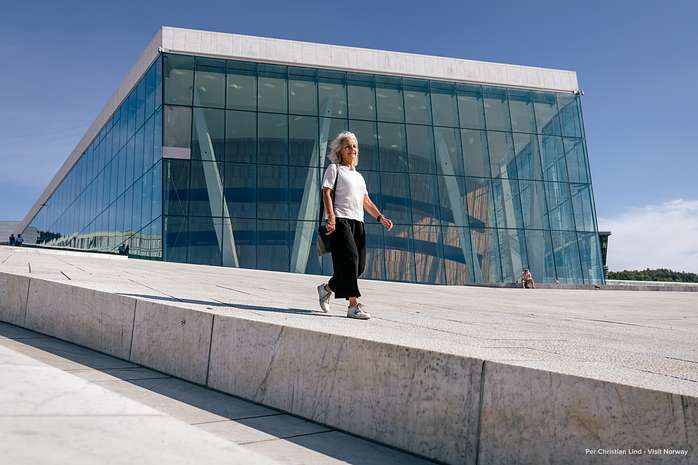
Modern Oslo features notable contemporary architecture, including the Oslo Opera House and revitalized waterfront districts.
Nordic Nature and Urban Planning
Oslo uniquely combines a capital city with immediate access to forests, fjords, and outdoor recreation.
Norwegian Cultural Institutions
Museums dedicated to figures such as Edvard Munch and explorers like Fridtjof Nansen reflect Norway’s artistic and scientific contributions.
Oslo is compact and easy to explore on foot, especially around the historic center and waterfront districts. Private tours are one of the best ways to understand the city’s architecture and cultural landmarks.
Most travelers spend one to two days in Oslo, often combining their visit with travel through Norway’s fjords or rail journeys to other Scandinavian cities.
Norwegian is the primary language spoken in Oslo, though English is widely spoken throughout the city. Norway uses the Norwegian krone (NOK) as its currency.
Late spring through early autumn offers the most comfortable weather for walking tours, though winter visits reveal another side of Nordic life.