

Jackie is an excellent guide and we highly recommend booking her for 6 hours to Miyajima and 4 hours for Hiroshima Peace Park tour and then entering the Peace Museum on your own. Jackie was a wealth of knowledge at every turn without ever being redundant or too wordy. We enjoyed her easy personality but steady guidance!

1
Experience available
Hiroshima Tours
Expert-led Hiroshima day tours that turn remembrance and resilience into meaningful discoveries
Let Your Curiosity Shape Your Journey
Join passionate experts on intimate walking tours that reveal a city's unique stories, spark conversations, and leave you seeing the world—and yourself—a little differently.

Crafted for conversation
With ten or fewer guests, ask questions, engage with your Expert, and fully immerse yourself.
Experts, not guides
Explore with 1,200+ Experts, from historians and architects to archaeologists and chefs.
Structured, never scripted
Your interests guide your Expert, leading to stories and perspectives that matter to you.
From curious to connoisseur
For first-time visitors or seasoned explorers, our tours span city highlights to deep-dive masterclasses.
Hiroshima, Seen with Context
Hiroshima isn’t only remembered for a single moment in history. Walk with an expert to discover how resilience, remembrance, and renewal shaped the city today.
Hear from our customers
Jackie was exceptional! Highly recommend ! Incredibly informative, her knowledge and experience living in the community for so many years added even more value to the day!
Jackie was the best tour guide we’ve ever had. Her personal insight into the Japanese culture is incredible, and truly a treasure. We were all fascinated all day by her stories. She showed us so many special things! We could have very easily spent two days with her. There is so much to learn about this area, and the trip to Miyajima was also really special. Jackie is phenomenal and we can’t give her enough praise.
Hiroshima Tours
Hiroshima sits along Japan’s Seto Inland Sea on the island of Honshu, a city whose history spans feudal Japan, modern industry, and the profound events of the 20th century. Founded as a castle town in the late 16th century, Hiroshima grew into an important regional center during Japan’s modernization in the late 19th and early 20th centuries.
The city became known worldwide after the atomic bombing of August 6, 1945, an event that reshaped global history and marked the end of World War II. In the decades since, Hiroshima has rebuilt itself as a modern city dedicated to peace and remembrance. Memorials, museums, and public spaces invite visitors to reflect on the past while considering the importance of international cooperation and reconciliation. Context Travel’s Hiroshima tours are led by historians and cultural experts who help travelers understand both the historical significance of the city and the cultural traditions that continue to shape life here today.
Hiroshima is known for its peace memorials, wartime history, and cultural heritage along Japan’s Inland Sea.
Hiroshima Peace Memorial Park
The park commemorates the victims of the atomic bombing and serves as a place for reflection, remembrance, and global calls for peace.
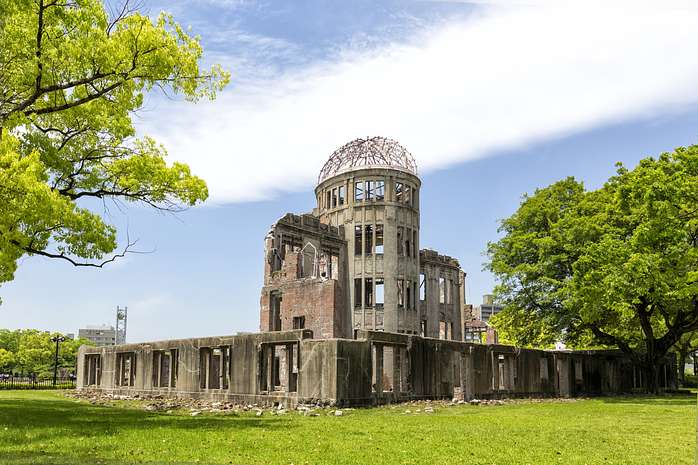
The Atomic Bomb Dome
One of the few structures left standing near the blast’s epicenter, the preserved dome has become a symbol of resilience and a UNESCO World Heritage Site.
World War II History and Memory
Hiroshima offers one of the most important places in the world to reflect on the consequences of war and the importance of peace.
Miyajima and Its Sacred Landscape
Just outside the city lies Miyajima Island, famous for the Itsukushima Shrine and its iconic torii gate rising from the sea.
Regional Food Culture
Hiroshima is known for its distinct style of okonomiyaki, a savory layered pancake that reflects local culinary traditions.
Hiroshima appeals to travelers interested in history, memory, and cultural reflection. First-time visitors often begin with expert-led introductions to Peace Memorial Park to understand the events of 1945 and their global significance. Lifelong learners are drawn to Hiroshima’s role in modern history and its transformation into a city dedicated to peace. Travelers interested in Japanese culture often combine historical exploration with visits to Miyajima Island and experiences of regional food traditions.
Hiroshima is a compact city with efficient public transportation, making it easy to explore major landmarks and museums. Peace Memorial Park and the Atomic Bomb Dome are located in the city center and are well-suited to private walking tours.
Most travelers spend one to two days in Hiroshima, often combining the city with a visit to nearby Miyajima Island.
Japanese is the primary language spoken in Hiroshima, though English is widely used in tourism settings. Japan uses the Japanese yen (¥) as its currency.
Spring and autumn offer particularly pleasant weather for exploring the city and the surrounding landscapes.
What is Hiroshima known for?
Hiroshima is known for the Peace Memorial Park, the Atomic Bomb Dome, and its role in the events that ended World War II.
Is Hiroshima worth visiting?
Yes. Hiroshima offers an important historical experience along with cultural landmarks and nearby natural beauty.
How many days should you spend in Hiroshima?
Most travelers spend one to two days exploring Hiroshima and visiting nearby Miyajima Island.
Is Hiroshima walkable?
Yes. Many of Hiroshima’s key landmarks are located close together and can be explored on foot.
What is Miyajima Island known for?
Miyajima is famous for Itsukushima Shrine and its iconic torii gate that appears to float on the sea.
What food is Hiroshima known for?
Hiroshima is known for its layered style of okonomiyaki, a savory dish made with cabbage, noodles, and other ingredients.