Cape Town Private Tours
3
Experiences available

Cape Town Tours

Expert-led Cape Town private tours that turn dramatic landscapes and layered history into meaningful discoveries

Let Your Curiosity Shape Your Journey

Join passionate experts on intimate walking tours that reveal a city's unique stories, spark conversations, and leave you seeing the world—and yourself—a little differently.

Crafted for conversation

With ten or fewer guests, ask questions, engage with your Expert, and fully immerse yourself.

Experts, not guides

Explore with 1,200+ Experts, from historians and architects to archaeologists and chefs.

Structured, never scripted

Your interests guide your Expert, leading to stories and perspectives that matter to you.

From curious to connoisseur

For first-time visitors or seasoned explorers, our tours span city highlights to deep-dive masterclasses.

Cape Town, Seen with Context

Cape Town isn’t only dramatic mountains and coastline. Walk with an expert to explore how Indigenous heritage, colonial history, and modern culture shaped the city.

Hear from our customers

68 Reviews

Our tour in Cape Town was terrific. Lesley was so warm and personable. We really appreciated her great knowledge and master of the history of South Africa. We would recommend Lesley and this tour to anyone that visits Cape Town.
Photo Shared by Robert with their review

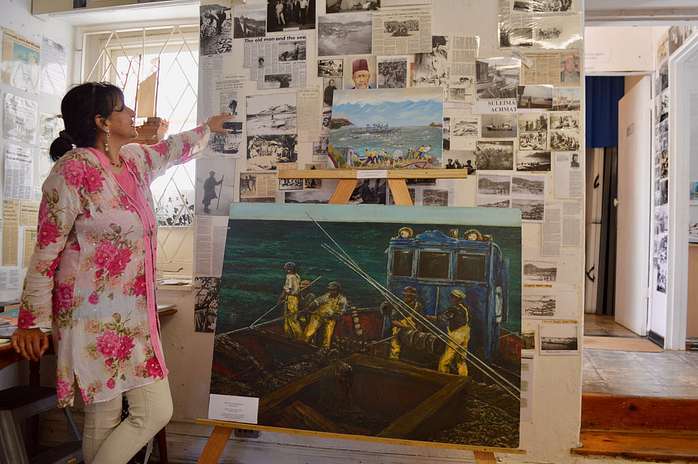
You’re luck if you get to have a Capetown walking tour with Joline. We had spent 5 days in Johannesburg learning about the history of South Africa, from the Voortrekker move north through the end of apartheid, but hadn’t learned much about the period before the British took over. Joline focused our tour on that earlier history, especially the Dutch slavery. She is truly an expert of this little-studied history, having researched and authored a book on the subject. I highly recommend spending some time with her.

Joline is such a passionate, knowledgeable and most importantly very easy-going person! We had an amazing time with her and learned a lot

Cape Town Private Tours

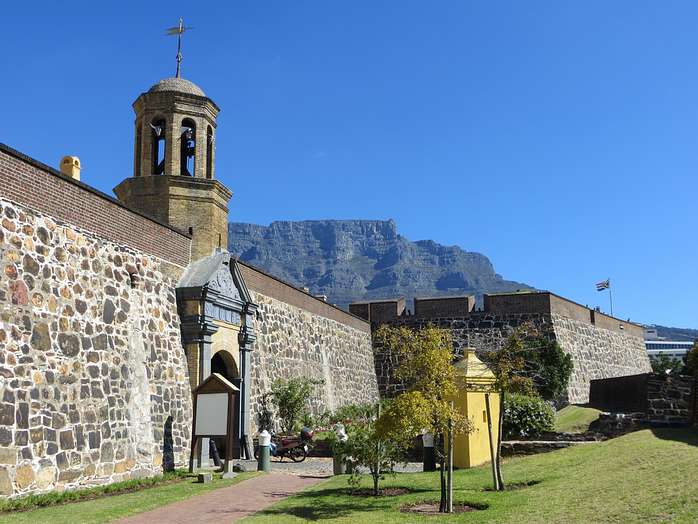
Cape Town sits at the southwestern tip of South Africa, where the Atlantic and Indian Oceans meet, framed dramatically by Table Mountain and the Cape Peninsula. Founded in the 17th century as a Dutch trading post along the sea route between Europe and Asia, the city quickly became a crossroads of cultures, languages, and global commerce. Over centuries, Cape Town’s landscape absorbed the influence of Indigenous communities, European colonists, enslaved peoples from Asia and Africa, and modern South African society.

Today, Cape Town is known for its extraordinary natural setting, vibrant neighborhoods, and its role in the country’s modern political history. From the legacy of apartheid to the creativity of contemporary South African culture, the city offers a powerful lens into the nation’s past and present. Context Travel’s Cape Town private tours are led by historians, cultural specialists, and local experts who help travelers understand how geography, migration, and political change shaped one of Africa’s most fascinating cities.
Cape Town is known for its dramatic landscapes, cultural diversity, and its central role in South Africa’s modern history.

Table Mountain and Natural Landscapes

The flat-topped Table Mountain dominates Cape Town’s skyline and forms part of a national park that protects the region’s unique biodiversity.

Robben Island and the History of Apartheid

Located just off the coast, Robben Island was the prison where Nelson Mandela was held for many years and remains one of the most important historical sites connected to South Africa’s struggle for democracy.

The Cape of Good Hope and Maritime History

The Cape Peninsula played a critical role in global navigation and trade routes between Europe and Asia for centuries.

Cultural Diversity and Neighborhoods

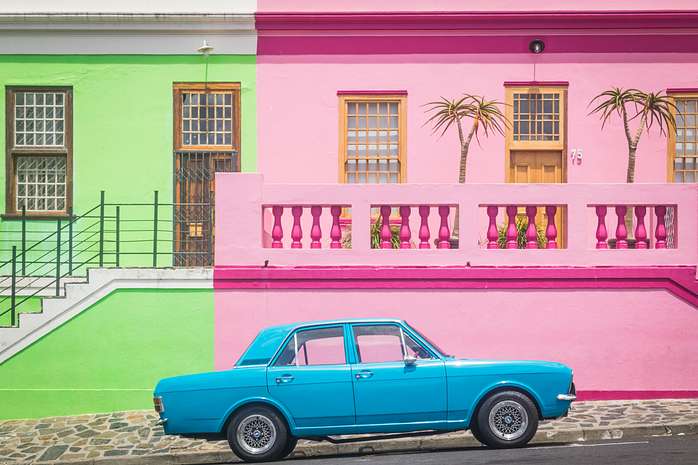
Districts such as Bo-Kaap reflect Cape Town’s multicultural heritage, shaped by communities with roots in Africa, Southeast Asia, and Europe.

Wine Regions and Culinary Culture

Nearby wine regions such as Stellenbosch and Franschhoek are internationally recognized for their vineyards and culinary traditions.
Cape Town appeals to travelers interested in landscapes, culture, and political history. First-time visitors often begin with guided introductions that connect the city’s natural landmarks and historic neighborhoods into a clear narrative of South Africa’s past and present. Lifelong learners are drawn to Cape Town’s role in the struggle against apartheid and its broader cultural history. Nature lovers appreciate the dramatic scenery surrounding the city, while food and wine enthusiasts explore the nearby vineyards and regional cuisine.
Cape Town is a large city, but many historic neighborhoods and landmarks are concentrated near the waterfront and central districts. Private walking tours are one of the best ways to explore the city’s history and cultural sites.

Most travelers spend three to four days in Cape Town, allowing time to explore the city as well as nearby attractions such as the Cape Peninsula and surrounding wine regions. The best time to visit is during the Southern Hemisphere summer (November through March), when weather conditions are warm and ideal for outdoor exploration.

English is widely spoken in Cape Town alongside several South African languages, including Afrikaans and isiXhosa. South Africa uses the South African rand (ZAR) as its currency.

What is Cape Town known for?

Cape Town is known for Table Mountain, its dramatic coastal landscapes, multicultural neighborhoods, and its role in South Africa’s modern political history.

Is Cape Town worth visiting?

Yes. Cape Town offers a unique combination of natural beauty, cultural diversity, and historical significance that makes it one of Africa’s most compelling travel destinations.

How many days should you spend in Cape Town?

Most travelers spend three to four days exploring Cape Town’s neighborhoods, landscapes, and nearby wine regions.

Is Cape Town walkable?

Some central neighborhoods are walkable, but the city is large and many attractions are spread out. Guided tours and transportation are often helpful for exploring different areas.

Why is Robben Island important?

Robben Island was used as a political prison during apartheid and is most famous as the place where Nelson Mandela was imprisoned for 18 years.

What food is Cape Town known for?

Cape Town’s cuisine reflects a mix of African, Dutch, and Southeast Asian influences, with dishes such as bobotie, Cape Malay curries, and fresh seafood.