musee d'orsay kids tour

Musée d'Orsay Tour for Kids

Learn about light and color in Impressionist art with a family-friendly art expert.

The Finer Details
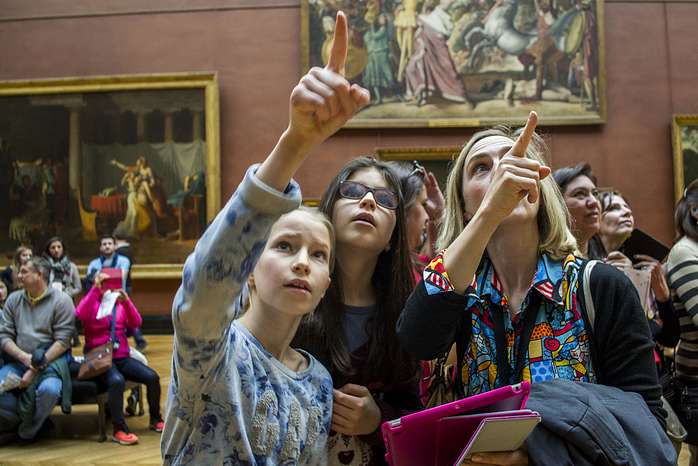
Discover the world-renowned Musée d'Orsay like never before with our engaging 2.5-hour tour designed for families. Led by an art historian specially trained in captivating young minds, this dynamic journey through the museum's former train station setting brings to life the vibrant world of 19th and early 20th-century masterpieces by artists like Courbet, Monet, and Seurat. 

We'll delve into major art movements such as Realism, Impressionism, and Post-Impressionism, all while encouraging close examination and appreciation of these iconic works. Join us for an unforgettable adventure, where your young art enthusiasts will gain both familiarity with art movements and a deeper understanding of the language of art.

From Trains to Tableaux—Musée d'Orsay Kids Tour

The Orsay's collections are housed in an opulent turn-of-the-century building (quite à propos for displaying art of the same time period). But did you know this building wasn't always a museum? In fact, it was constructed as a train station! We'll begin our tour by interpreting the structure together, a first step in our lesson of "reading" art and our surroundings. Why would the building need such a lofty glass ceiling and enormous archways? Can you imagine where the trains might have gone? Surely we'll look at images of the station in its heyday before moving on to talk about the shift from station to museum. We might also talk about other museums we've seen, perhaps in our home cities, and imagine what other unconventional spaces could be used to house art collections.

Painting in Nature!

With discussions of trains under our belts, we'll move on to the art itself. We may start with works from the Barbizon school, considered a precursor to Impressionism. Barbizon painters worked almost exclusively outdoors, en plein air, and tried to paint their surroundings in as realistic a way as possible. Have you ever taken a sketchpad outside to draw? How is it different than drawing a subject, inside, from memory? Would the colors of your drawing change depending on the time of day and the position of the sun?

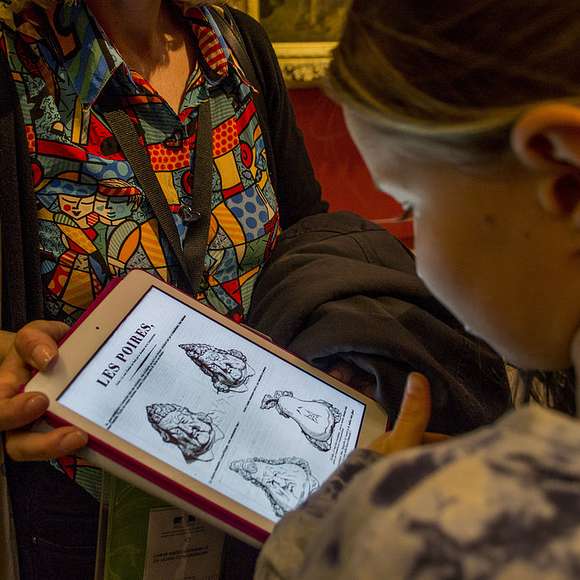
Moving on from the Barbizon, we may look at Realism, particularly works by Courbet and Daumier. These artists and their contemporaries liked to paint the people they saw in everyday life—doing their shopping, or playing chess—rather than stiff, idealistic portraits of people like Kings and Queens. Sometimes their paintings and drawings were humorous and even satirical, while at other times they were simple reflections of human activity. Looking at these works together, we'll turn the question to you: If you had to draw or paint in a Realist manner, what would you want to draw?

Impressionism

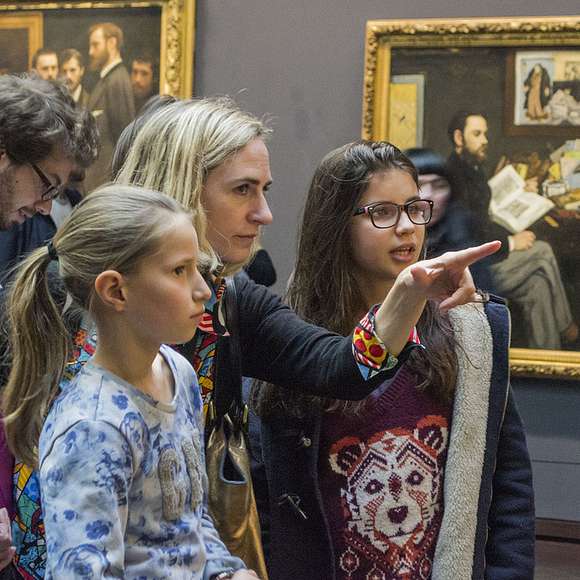
At the heart of our walk, we'll take in the work of the Impressionists. These artists—some of the most famous of which are Claude Monet (whose house and garden we visit on our Giverny Tour), Edgar Degas, and Édouard Manet—rejected formal artistic rules. Like the Barbizon and Realist painters, they preferred subjects drawn from modern life. Can you detect any differences between the Impressionist works and the Realist works we just saw? One clarifying difference is in the brush strokes—in the Impressionist works, they are visible, short, and thick—almost texturized. Can you imagine what an Impressionist painting might feel like to touch? This was revolutionary at the time, and many of these artists were ridiculed by the press and art collectors for being too avant-garde with their ideas.

Take Aways

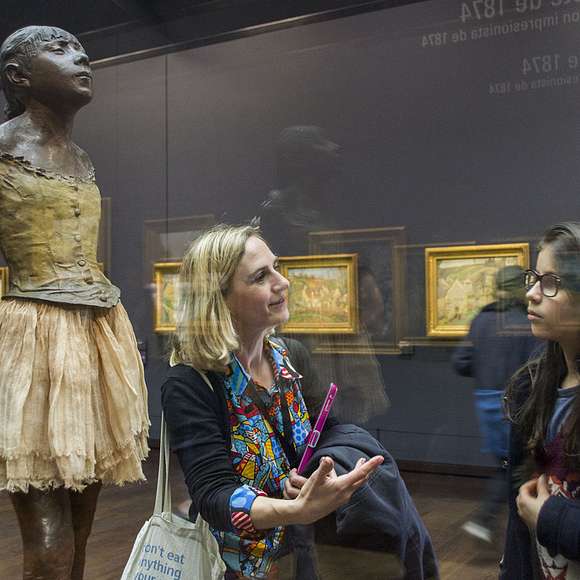
As our time together comes to a close, perhaps after a brief look at some of the Post-Impressionist works in the museum, like Pointillism (can you imagine the time it might take to paint a large-scale canvas with tiny little dots?), we'll emerge with a better understanding of how to look at art, and perhaps also the ability to see the evolution of these nineteenth-century movements. Our Musée d'Orsay for Families tour is the perfect complement to our Louvre for Kids Tour, which looks at art from Antiquities until the early nineteenth century.

Booking Instructions

Please let us know in advance of the tour if you or your children have special interests you would like addressed.
 

Frequently Asked Questions

What kind of art is in the Musée d’Orsay? 
The Musée d’Orsay collection contains works roughly from 1848-1914. Some of the art movements include Romanticism, Realism, Impressionism and Post-Impressionism, Symbolism, and Pointilism, and such artists as Manet, Courbet, Corot, Monet, Renoir, Degas, Gaugain, Cézanne, Van Gogh, and Seurat. Our walk will focus on the tenets of these movements in a child-friendly way.

There are 7 in my group, but your website won't allow me to include more than 6 participants. Can't you make an exception?
No, unfortunately, due to venue reservation restrictions, we cannot accommodate groups larger than 6 people. If your group is larger, we recommend that you split into multiple groups.

When is the best time to visit Musée d’Orsay? 
The Musée d’Orsay is very busy and not as spacious as the Louvre. We highly recommend visiting the museum when it is open late on Thursday evenings.

Is the Musée d’Orsay wheelchair accessible?
The Musée d’Orsay is wheelchair accessible. There are elevators throughout the museum, and you can print a wheelchair accessibility guide from the site. 

Do you have an adult version of this tour?
We do! See our Musée d'Orsay Tour for up to 6 people, an in-depth tour of the collection geared for adults and mature teens.

Are children's tickets free? 
Yes! If you booked a private tour, participants under 18 are free to enter the museum.
Book a Tour
Where You’ll Go

From iconic landmarks to tucked-away local favorites, these are the places you’ll explore and experience firsthand with your Expert.

  • Musée d'Orsay
What’s Included As Standard
Here’s a look at what your tour covers, plus anything you’ll want to consider arranging separately, so you can plan with confidence.
Included
  • English-speaking expert guide
    Tours led in English, offering you unbroken understanding throughout.
  • Intentionally sized groups
    A smaller group means more time for conversations and questions.
  • Tickets and entrance fees
    All entry tickets included (unless clearly stated otherwise).
  • Headsets
    Headsets are included on tours that need them, so every word can be heard.
Excluded
  • Gratuities
    We encourage tipping as a way to thank your guide after your experience.
  • Food and drink
    Refreshments are only included during a tour when clearly noted.
  • Transportation to and from the meeting point
    Guests organize pre- and post-tour transport themselves - this service can be added by request.
  • Hotel pickup or drop-off
    Unless noted, travel to or from accommodation isn’t included - this service can be added by request.
Where You'll Explore
Map of Musée d'Orsay Tour for Kids general meeting point area

Make the Most of Your Tour

Some helpful advice for getting the most from your experience, from practical prep to small on-the-day tips.

Dos:
  • Wear comfortable footwear
  • Check the weather and dress appropriately
  • Bring a bottle of water (no glass)
  • Feel free to ask your Expert anything
Don'ts:
  • Bring firearms or weapons
  • Bring sharp objects (e.g. knives, swiss army knives, switchblades, hiking sticks)
  • Dress inappropriately to enter religious sites or sacred monuments
Any questions? You can always contact us.

Don’t just take our word for it

66 Reviews

Laurent was outstanding. The tour was originally booked as a kids' tour, but our plans changed, and it ended up just being me. No problem—he adjusted immediately and delivered a fantastic experience. He clearly knows the museum extremely well and has a great instinct for choosing just the right paintings to explain how Realism, Impressionism, and Post-Impressionism connect. Rather than overwhelming you with details, he uses a few key works to tell the broader story of how the movements evolved. One tip: do this tour and then visit Montmartre, ideally with a guide. Seeing the neighborhood afterward really helps connect the art to the place where so much of it actually happened. Highly recommended.

Sunday was wonderful! My kids were entertained and mesmerized by her tour which was geared perfectly for them.

James was a wonderful guide for our family of four. The way that he wove the history of the building, friends, and the artworks was so engaging. He really connected with our kids and us. I highly recommend!

Let Your Curiosity Shape Your Journey

Join passionate experts on intimate walking tours that reveal a city’s unique stories, spark conversations, and leave you seeing the world—and yourself—a little differently.

Structured, never scripted

Your interests guide your Expert, leading to stories and perspectives that matter to you.

Crafted for conversation

With ten or fewer guests, ask questions, engage with your Expert, and fully immerse yourself.

Experts, not guides

Explore with 1,200+ Experts—from historians and architects to archaeologists and chefs.