
1
Experience available
Casablanca Tours
Expert-led Casablanca tours that turn modern Morocco and colonial legacy into meaningful discoveries
Let Your Curiosity Shape Your Journey
Join passionate experts on intimate walking tours that reveal a city's unique stories, spark conversations, and leave you seeing the world—and yourself—a little differently.

Crafted for conversation
With ten or fewer guests, ask questions, engage with your Expert, and fully immerse yourself.
Experts, not guides
Explore with 1,200+ Experts, from historians and architects to archaeologists and chefs.
Structured, never scripted
Your interests guide your Expert, leading to stories and perspectives that matter to you.
From curious to connoisseur
For first-time visitors or seasoned explorers, our tours span city highlights to deep-dive masterclasses.
Casablanca, Seen with Context
Casablanca isn’t simply a modern Moroccan metropolis. Walk with an expert to explore how colonial ambition and Moroccan identity shaped the city.

Hear from our customers
Casablanca Tours
Casablanca sits along Morocco’s Atlantic coast, a city that reflects the country’s transition from historic trading hub to modern economic center. Though its roots trace back to Berber settlements and later Portuguese and Spanish influence, much of the city’s present form emerged during the early 20th century under the French protectorate. Wide boulevards, Art Deco architecture, and port infrastructure transformed Casablanca into Morocco’s commercial capital.
Today, Casablanca offers travelers a different perspective on Morocco—less medieval than cities like Marrakech or Fes, but deeply connected to the country’s modern identity. Its architecture, waterfront, and neighborhoods reveal the intersection of European urban planning and Moroccan culture. Context Travel’s Casablanca tours are led by historians and cultural experts who help travelers understand how colonial history, religion, and commerce shaped Morocco’s largest city.
Casablanca is known for its modern Moroccan identity, striking architecture, and global cultural symbolism.
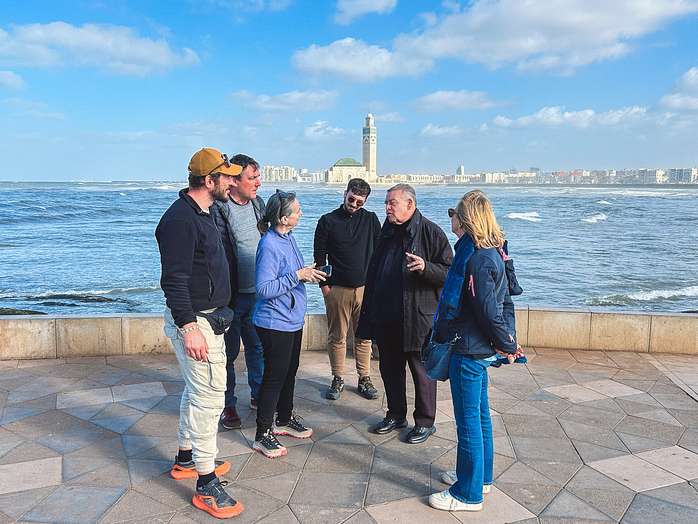
Hassan II Mosque
One of the largest mosques in the world, Hassan II Mosque stands dramatically on the Atlantic shoreline. Its architecture combines traditional Moroccan craftsmanship with modern engineering.
Art Deco Architecture
Casablanca is home to one of the largest collections of Art Deco buildings in Africa, reflecting the city’s development during the French colonial period in the early 20th century.
Morocco’s Economic Capital
As the country’s largest city and primary port, Casablanca serves as Morocco’s financial and commercial center.
The Film Casablanca
Although the 1942 film was largely shot in Hollywood, the movie’s setting helped establish Casablanca as one of the most famous cities associated with romance and wartime intrigue.
Atlantic Coastal Setting
Casablanca’s waterfront and port have long connected Morocco to international trade routes across Europe, Africa, and the Americas.
Casablanca appeals to travelers interested in modern Moroccan culture and architecture. First-time visitors often explore the city as an introduction to Morocco’s contemporary identity before traveling to historic imperial cities. Lifelong learners are drawn to Casablanca’s architectural heritage and colonial history, while film enthusiasts enjoy discovering how the city became globally associated with the classic film Casablanca. Travelers curious about urban culture, design, and modern Moroccan life often find the city particularly rewarding.
Casablanca is Morocco’s largest city and transportation hub, making it a common entry point for international travelers. While the city itself is large, many key landmarks—including the Hassan II Mosque and central districts—can be explored efficiently with guided tours.
Most travelers spend one to two days in Casablanca before continuing to other destinations such as Marrakech, Fes, or Rabat. Spring and autumn offer the most comfortable weather for walking tours along the coast and in the city center.
Arabic and French are widely spoken in Casablanca, though English is increasingly common in tourism and hospitality. Morocco uses the Moroccan dirham (MAD) as its currency.
What is Casablanca known for?
Casablanca is known for the Hassan II Mosque, its Art Deco architecture, and its role as Morocco’s largest city and economic capital.
Is Casablanca worth visiting?
Yes. Casablanca offers insight into Morocco’s modern culture and architecture, along with one of the most impressive mosques in the Islamic world.
How many days should you spend in Casablanca?
Most travelers spend one to two days exploring Casablanca before visiting other destinations in Morocco.
Is Casablanca walkable?
Some districts are walkable, particularly around the city center and waterfront, though the city is large and transportation is often helpful.
Was the movie Casablanca filmed in the city?
The 1942 film Casablanca was largely filmed in Hollywood studios, but its story and setting helped make the city internationally famous.
Why is the Hassan II Mosque important?
The Hassan II Mosque is one of the largest mosques in the world and a symbol of modern Moroccan architecture and craftsmanship.
Is Casablanca safe?
Yes, Casablanca is generally considered safe for tourists. As with any large city, it’s important to stay aware of your surroundings, especially in busy areas.
What should you wear in Casablanca?
Casablanca has a relatively casual dress code, but modesty is appreciated. Women should avoid wearing revealing clothing, especially in religious sites and traditional areas.